
HOW CLARITY IS PROCESSED
Clarity forms before communication breaks.
The Colored Brain Communication Model explains how clarity forms, why miscommunication happens, and what alignment requires before people can move in the same direction.

CORE CONCEPT
Clarity is not automatic.
It is processed.
People do not always take in information, filter it, and build clarity in the same order. When a message feels unclear, each brain tries to resolve uncertainty differently.
In the Colored Brain framework, this clarity-building process is called Ambiguity Relief – the way the brain reduces uncertainty until there is enough clarity to act, respond, decide, or move forward.
That difference is where many misunderstandings begin. The problem is not always attitude, resistance, or poor communication. Often, people are trying to reach clarity through different internal sequences.
THE FOUR ORIENTATIONS
People do not build clarity in the same way.
Each orientation describes a different way the brain may reduce uncertainty before action, response, or alignment can happen.
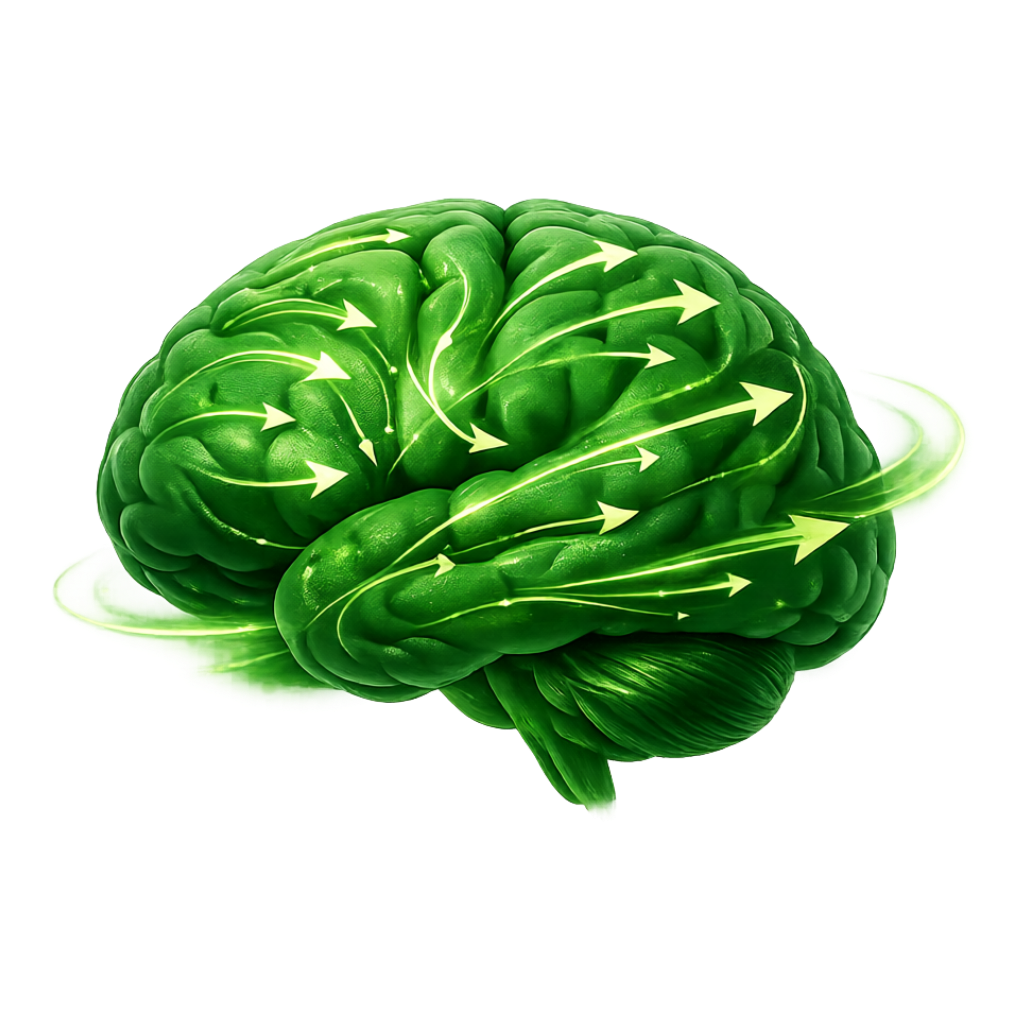
GREEN BRAIN
Chaotic Processor
Clarity through action
How clarity forms:
Through movement, testing, adapting, and changing direction as information unfolds.
Connection pattern:
Starts from disconnected action pieces and builds clarity through movement.
May show up as:
Fast starts, quick problem-solving, possibility thinking, and adjusting while moving.
Often misread as:
Careless, impatient, scattered, or moving too fast.

RED BRAIN
Linear Processor
Clarity through structure
How clarity forms:
Through order, sequence, structure, and clear steps before moving forward.
Connection pattern:
Connects through structure, sequence, and linear cross-referencing.
May show up as:
Planning, organizing, checking the process, and wanting the next step defined.
Often misread as:
Rigid, resistant, slow, or too controlling.
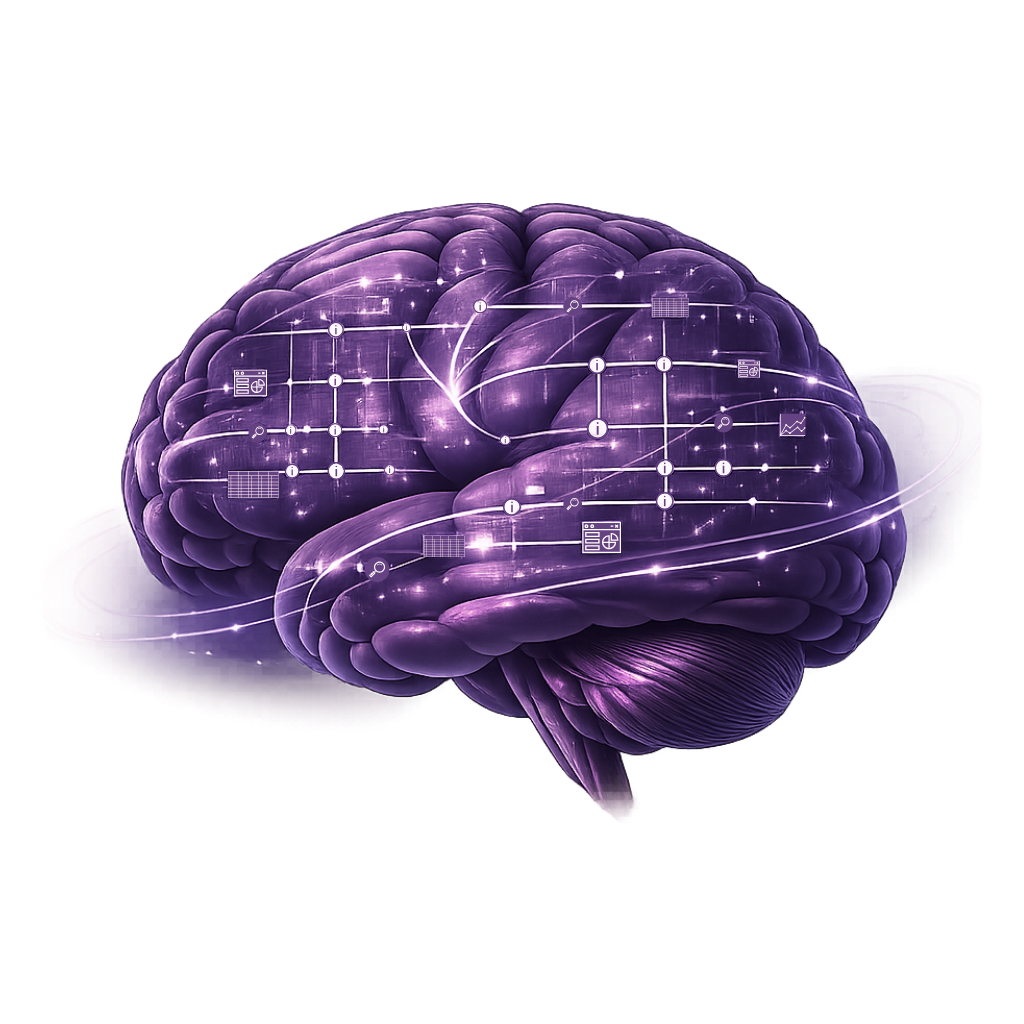
PURPLE BRAIN
Relational Processor
Clarity through information
How clarity forms:
By gathering, linking, and checking information until the bigger picture makes sense.
Connection pattern:
Connects through data, detail, and stable information relationships.
May show up as:
Asking for detail, connecting data points, checking accuracy, and spotting gaps.
Often misread as:
Overthinking, nitpicking, delaying, or blocking progress.

BLUE BRAIN
Intuitive Processor
Clarity through connection
How clarity forms:
Through context, tone, connection, and what is sensed beneath the words.
Connection pattern:
Connects through association, perception, and subconscious reference.
May show up as:
Reading the room, noticing emotional shifts, sensing alignment, and connecting meaning.
Often misread as:
Too emotional, vague, distracted, or not factual enough.
WHY MISCOMMUNICATION STARTS
The problem is not the conversation.
It is the clarity gap underneath it.
People often think they are disagreeing about the words, the decision, or the next step. In many cases, they are actually working from different internal definitions of what feels clear enough to move forward.
Same words. Different readiness.
Two people may agree on the same goal, but one brain may feel ready to move while another still needs structure, data, or connection before clarity is complete.
Common sense is not common clarity.
Each brain tends to treat its own clarity process as obvious. That is where judgment starts: slow, reckless, too detailed, too soft, too rigid, too vague.
Misread processing becomes misread intent.
When the process is not understood, people start judging attitude, intelligence, commitment, or care instead of seeing the clarity process underneath.
THE CBCI™ ASSESSMENT
The assessment makes the invisible pattern visible.
The CBCI™ Assessment – the Colored Brain Communication Inventory – helps identify how a person naturally processes information, reaches clarity, learns, and relates.
It is not a personality test, behaviour test, intelligence test, motivation profile, or social-style assessment. It focuses on the person’s Genetic Foundation, Brain Flexibility, and the miscommunication patterns that can form when different clarity processes collide.
Genetic Foundation
Reveals the natural clarity process a person tends to rely on first.
Brain Flexibility
Highlights where a person has learned to work outside their natural processing pattern.
Communication Friction
Identifies where different clarity processes may create frustration, delay, or misunderstanding.
SCIENTIFIC FOUNDATION
A globally established cognitive framework
The Colored Brain Communication Model was developed by Arthur F. Carmazzi through decades of research into how individuals process ambiguity and stabilize clarity.
The model identifies distinct Ambiguity Relief sequences rooted in cognitive processing orientation.
It has been applied globally across leadership development, organizational alignment, and communication training environments.


APPLICATION
Where this model is applied
Clarity-processing differences affect how people communicate, decide, lead, learn, and relate. The model is applied differently depending on the context.
For Individuals and Families
Understand how clarity forms at home, in relationships, parenting, learning, and personal decision-making.
For Organizations
Reduce miscommunication, improve alignment, strengthen leadership, and help teams move with clearer shared understanding.
NEXT STEP
Stop fixing the conversation.
Find the clarity gap.
When the same misunderstandings keep coming back, the problem is usually deeper than wording. DYG.life helps people see where clarity breaks before frustration, resistance, or blame takes over.